



Would recommend these cards to every parent out there!
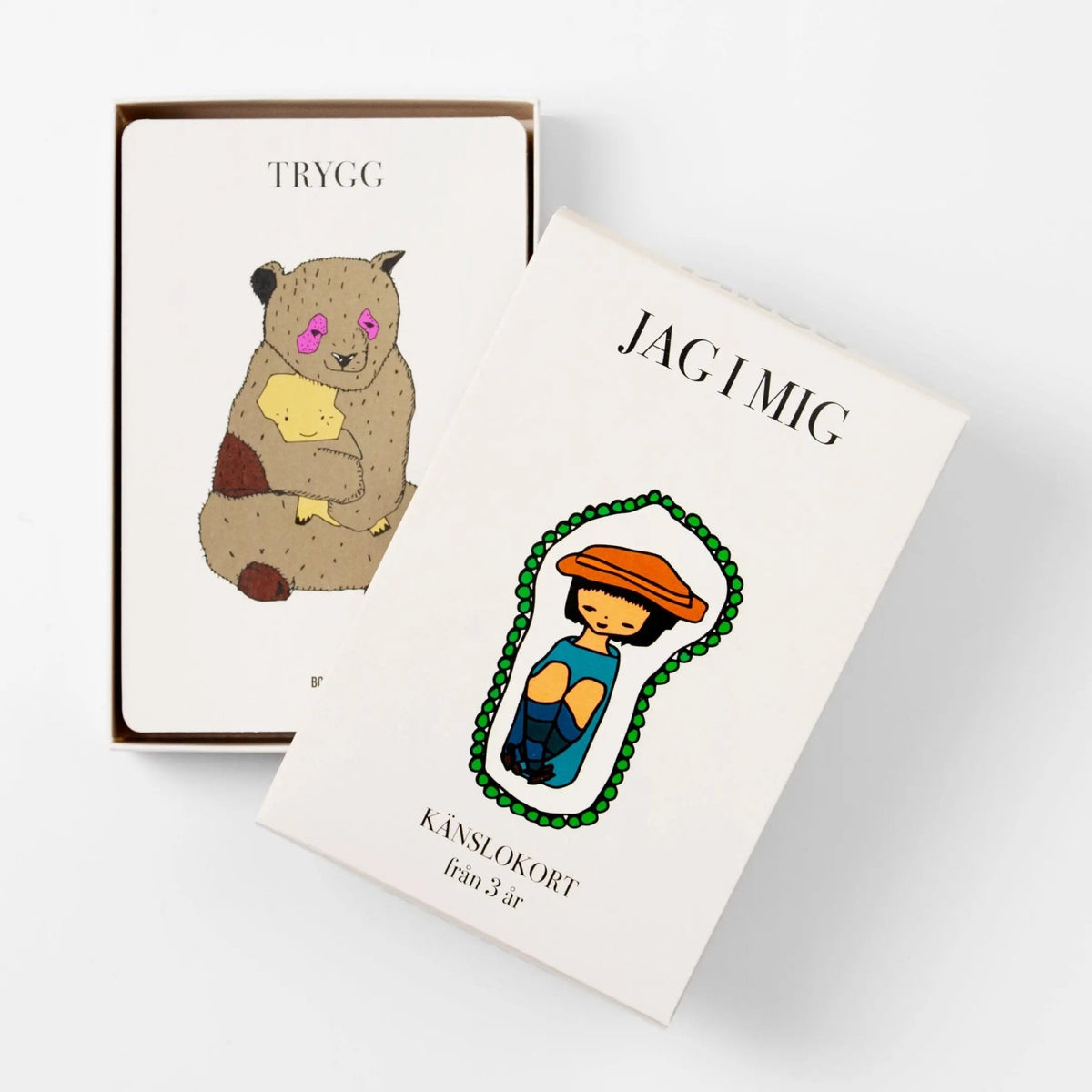
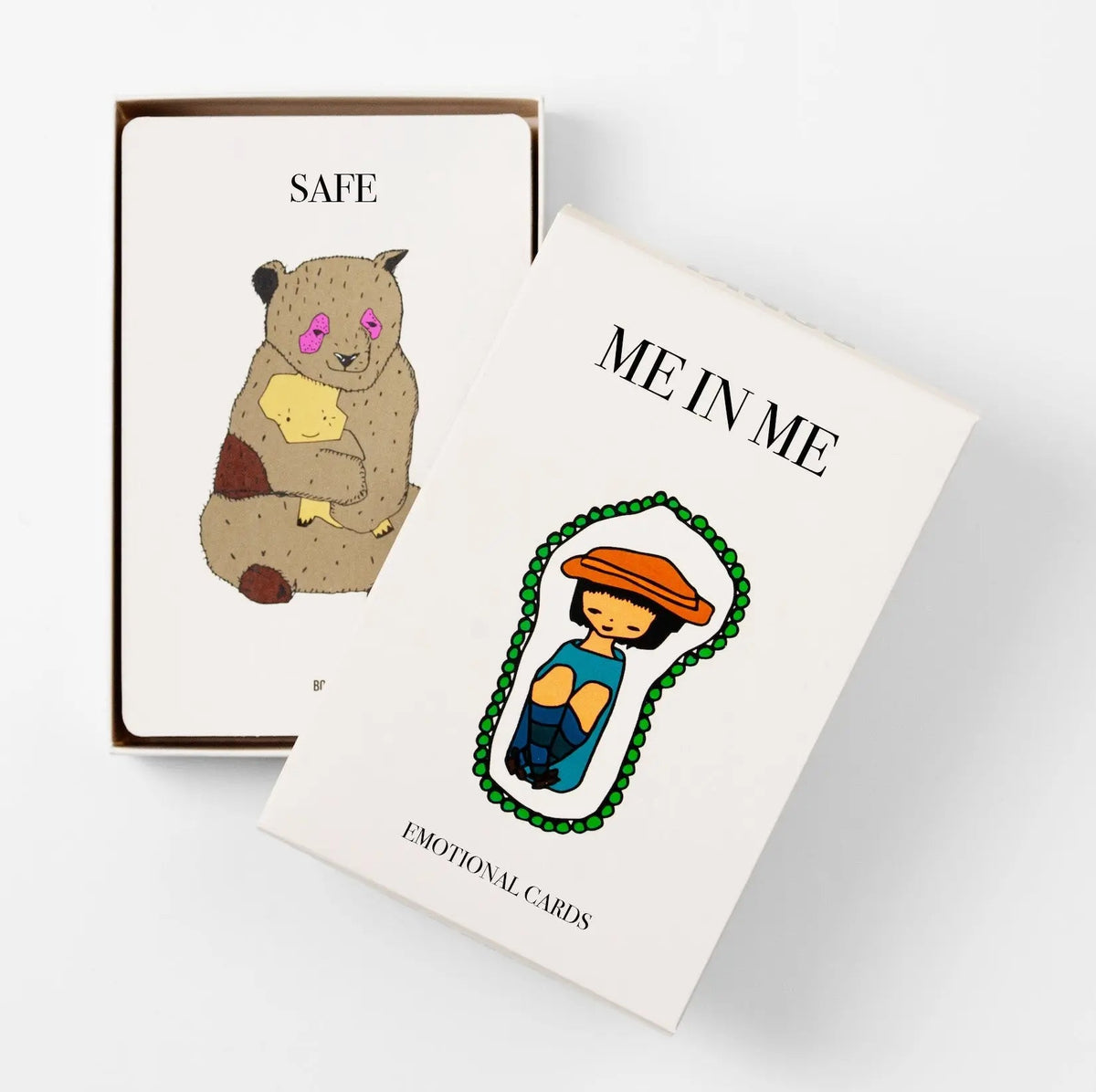
Me in Me - When feelings are given words
Helps children put feelings into words, grow in self-confidence — and strengthen their bond with you as a parent.
Från 3 år · 21 kort i A6 · Utvecklade av leg. psykolog
- Regular price
-
279 kr - Regular price
-
- Sale price
-
279 kr
Tax included.
Frakt från 50 kr · Leverans 1–3 dagar inom Sverige
14 dagars ångerrätt · Säker betalning med Klarna, Swish eller kort
Couldn't load pickup availability
Product description
- Designed for children from age 3
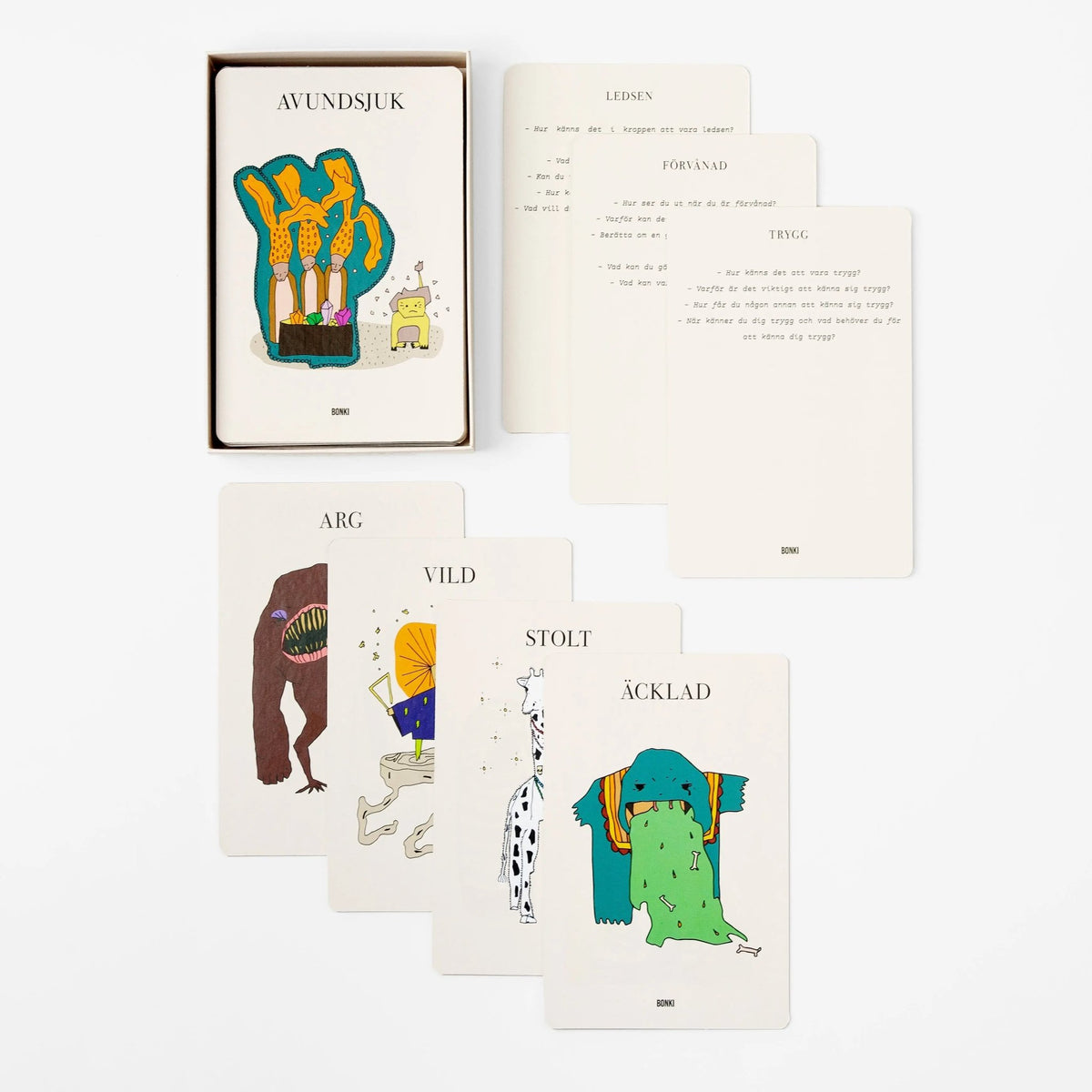
- 21 high-quality cards
- Each card represents a unique emotion
- Questions for every emotion, written by a licensed psychologist and a linguist (Sweden)
- The cards are illustrated to spark curiosity & imagination
- Large and easy to handle (A6)
- No right or wrong answers
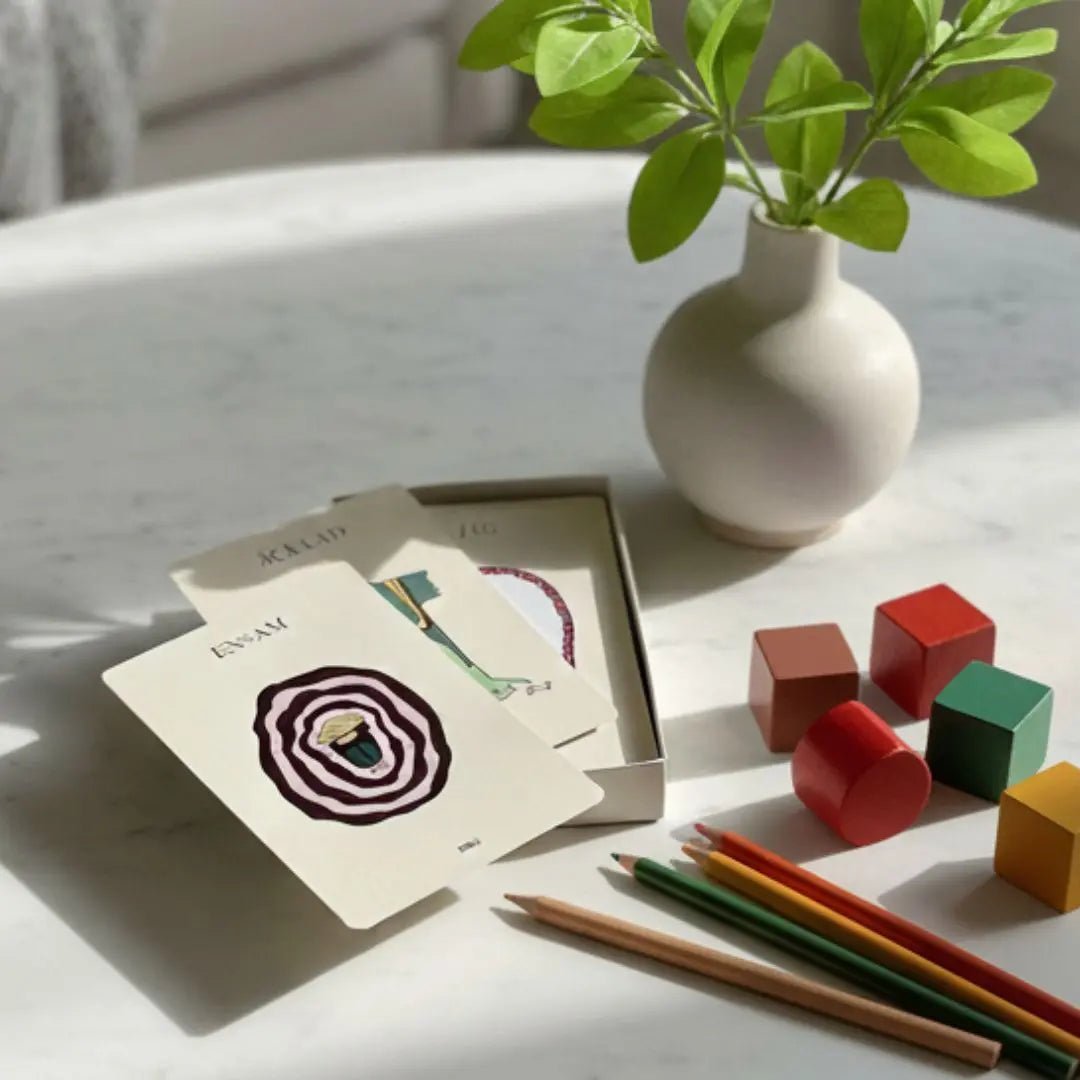
- No screen, no preparation
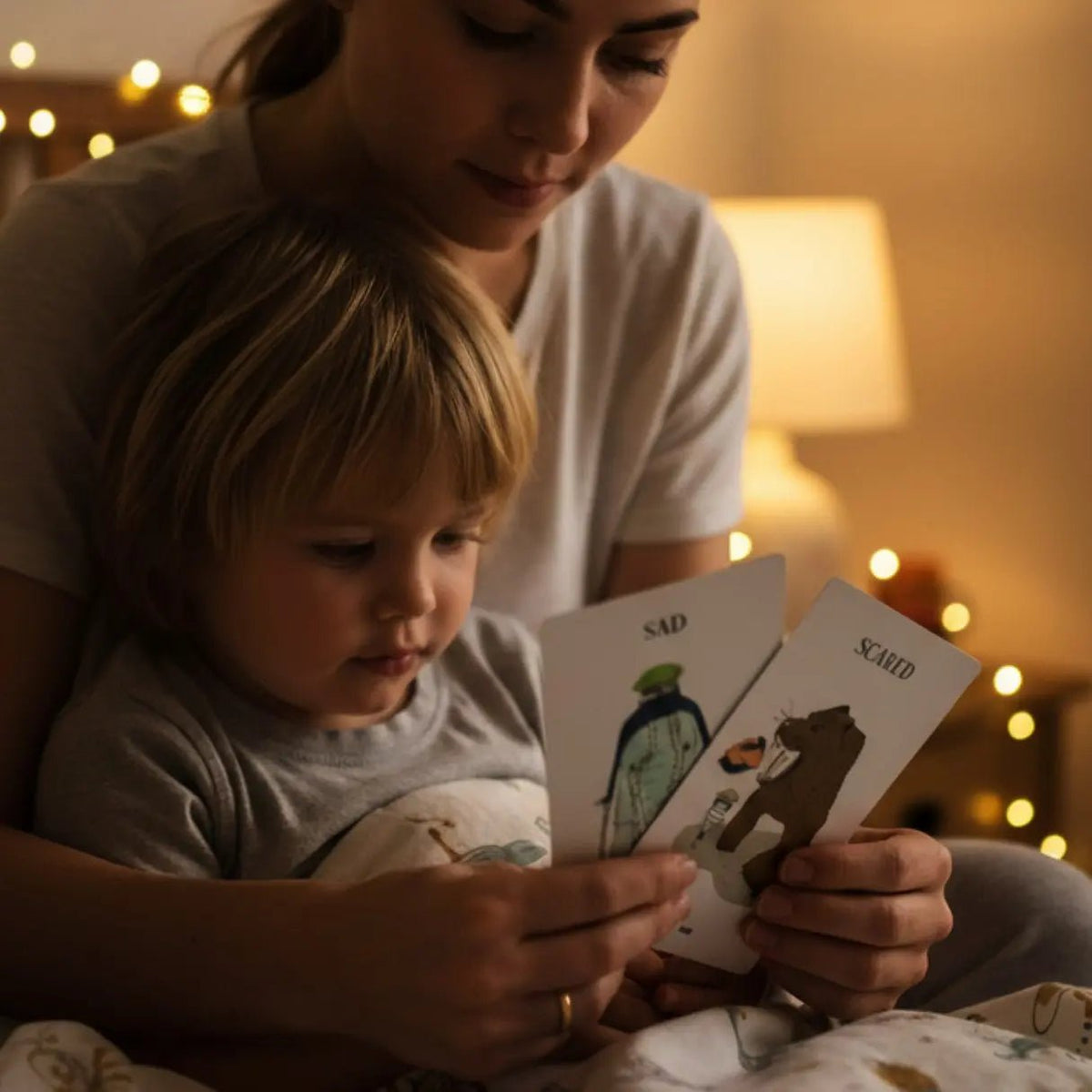
- Used together with an adult
Which feelings are included
Me
The self is a person's conscious perception of themselves and their innermost core. In a Freudian interpretation, the self is one of the three parts of the psyche: the id, the ego, and the superego. The ego functions as a mediator between the id's primitive instincts and the superego's ideals and morality.
Envious
When a person feels envy, they experience a desire to have something that others have or that they undeservedly have something that they value. It is often a combination of envy and a heartfelt desire to possess what the other person has.
Stressed
Stress is a reaction that can be a physical, mental or emotional response to a perceived challenge or demand. It is a condition that occurs when people are exposed to external events of various kinds that involve strain. Stress is the body's reactions to these that trigger a “fight-or-flight” response in the body.
Disappointed
A disappointed person often experiences a mildly negative feeling caused by something in the world not turning out as they had hoped or wished. Often a disappointed person feels down or dissatisfied, and the disappointment can be directed at a person, situation, or themselves.
Jealous
A jealous person feels that the relationship they have with another person can be disrupted by a third person entering the context (“interfering”). This often involves a negative feeling of insecurity or fear.
Determined
Being determined describes a person's character as confident, resolute and firm in their will. A determined person is often clear and self-assured in their ability to make decisions.
Lonely
A lonely person has a feeling of loneliness — they are aware that they lack contact with others. Loneliness can be physical, through a lack of human contact, or emotional, through feeling emotionally disconnected from other people.
Wild
Being wild is a description of a person who is spontaneous, adventurous, and free from conventions. Children who play wildly are noisy and go beyond normal norms and limitations. Being wild can also be perceived as uncontrolled and messy.
Surprised
A surprised person has the feeling of being taken by surprise by something unexpected. The feeling comes when the situation does not match previous experiences or expectations and can be both positive and negative.
Afraid
Fear is a basic reaction to danger or threat. A fearful person experiences a feeling of unease, dread, or discomfort and often has a “fight-or-flight” reaction.
Curious
A curious person has a feeling, usually one of pleasure, that contributes to and increases the motivation to want to know more about something that they have a need to explore or experience.
Happy
Happiness is perhaps the most positive emotion. It occurs when we feel particularly satisfied with what is happening or with the conditions that currently exist.
Shame
Shame is triggered in us humans, for example, when we perceive that we are being disapproved of by others for something inappropriate that we have done or said. It also comes as a result of self-criticism and beliefs that we have done something wrong.
Proud
An experience of self-worth that gives a feeling of joy and satisfaction over one's own or someone else's achievements or actions.
Angry
Being angry is an emotional reaction characterized by strong irritation and a motive to intervene, attack, defend, accuse, threaten, etc. An angry person often experiences irritation and frustration, and the anger can be felt both physically and emotionally.
Left out
Feeling left out occurs when people are not accepted or feel accepted in the context they find themselves in. A person who feels left out feels socially or emotionally distanced from other people or a specific group of people.
In love
Being in love is a feeling of affection, caring, involvement, and helpfulness. A person who is in love experiences a deep sense of attraction and a “rush” at the prospect of meeting the person they are in love with.
Sad
Being sad means feeling down and despairing in response to something that has happened. It is an emotional reaction to negative events, setbacks, or unpleasant situations.
Safe
Being safe is a state of protection and security, a feeling of trust that comes from the perception that there are no threats. Someone who feels safe is untroubled in the situation they are in. It can be both a physical situation or an emotional situation.
Disgust
A person who feels disgust has a strong feeling of revulsion, and experiences it in response to something that is perceived as unpleasant or repulsive. The feeling can be due to tastes or smells, but also situations and behaviors that are perceived as morally or ethically unacceptable.
Loathing
A person who feels loathing wants to distance themselves from something, to hate it, to see it as something dreadful. Something that arouses loathing is something one has reason to fear. It can be physical objects but also situations or people.
Shipping
Delivery 1-3 days within Sweden / Delivery 4-7 days to the USA and the rest of Europe
Production
Created and produced in Sweden
Customer Reviews
Overall rating: 4.7 / 5 from 84 reviews.
Best buy 2023 for both me and my three kids!
Bara positivt! Samtalar med korten nästan varje dag. Förtroende, vågar vara mer öppen med känslor. Vi turas om att svara och berätta.
Min treåring älskar korten och vi har haft så fina samtal kring känslor. Vill tipsa alla jag känner och inte känner om dessa kort!
Jag trodde min dotter hade svårt att uttrycka känslor men det var nog jag som inte visste hur man skulle göra en konversation med henne om detta. För med hjälp av dessa kort kan hon verkligen uttrycka känslor hon haft under dagen och koppla till situationer. Väldigt positivt överraskad mamma
Beautiful cards for interesting discussions and deeper, more meaningful relationships!
Perfekt sätt att lära sig sätta ord på sina känslor. Köpte till min 3-åriga son och han+vi älskar!
Väldigt fina kort med bra frågeställningar kring känslor och identitet.
Målande bilder och perfekt för att lära min lilla tjej på snart 4 år om olika känslor.
Så otroligt fina och så användbara och genomtänkta. Vi har fått så himla fina stunder tillsammans tack vare korten, och de har på väldigt kort tid blivit en riktig go to för oss! Tack för att ni finns, Bonki!

Blev väldigt positivt överraskad av kvaliteten!! Så himla fina kort!
JAG I MIG - När känslor får ord
Bra köp
Funkade bra för mitt barnbarn fin samtal.
Fina illustrationer och bra frågor, vi har använt dom främst när vi ritat och efter middagen.
Super!
Nöjd
Såg mycket fram emot att använda korten! Upplever dock att det är övervägande negativa känslor som porträtteras, även att frågorna på korten är väldigt lika varandra. Samt en del svårt ord att förstå för en snart 4 åring.. Kanske växer hon i dom! Jag gillar verkligen idén!
Bra!
Nöjd med min beställning!
JAG I MIG - När känslor får ord
Ska bli present så jag hoppas den kommer att uppskattas
JAG I MIG - När känslor får ord
Jättebra kort! Hade önskat lite tydligare bilder där min 3 åring kan koppla känslan till bilden lättare…
JAG I MIG - När känslor får ord
👌
JAG I MIG - När känslor får ord
Positivt överraskad över hur mina ungdomar, 14-16 år, blev engagerade i frågorna, det öppnade för längre samtal.
JAG I MIG - När känslor får ord
Det känns fint att få diskutera känslor med mina barn och samtidigt reflektera över dom själv. På så sätt blir vi alla mer känslomedvetna vilket stärker vår familj och vårt mående. Tack för en fantastisk produkt!
JAG I MIG - När känslor får ord
Superfina kort med bra frågor för att skapa samtal kring känslor.
JAG I MIG - När känslor får ord
Fina illustrationer och bra frågor som tas upp under varje känsla. Frågor som leder till bra och givande samtal med dottern, så man kan få en inblick i hennes inre värld.
JAG I MIG - När känslor får ord
Bra
JAG I MIG - När känslor får ord
Toppen
JAG I MIG - När känslor får ord
Korten överraskade genom att vara större än jag förväntade mig, samt att de är rätt tjocka vilket gör ett de inte viks vid användning. Verkligen toppenkvalité! Alla barnen engagerade sig direkt och ville titta på de lite knasiga illustrationerna och ställa frågor från korten till varandra. Det blev många fina diskussioner kring jaget, känslor och hur vi vill vara nu och framåt. Rekommenderar verkligen dessa kort till alla. Alla borde vara intresserade av sina barns känslor och hjälpa dem sätta ord på dem.
JAG I MIG - När känslor får ord
Bra kort för att skapa värdefulla samtal!
JAG I MIG - När känslor får ord
Superfina kort som jag har börjat introducera för barnen
JAG I MIG - När känslor får ord
Superbra kort , hemma tar vi 1-2 kort varje gång vi äter middag. Sen köpte jag också i julklapp till mitt barns förskoleklass i julklapp nu också. Älskar dom! ❤️ många av korten är såna saker och situationer/känslor som alla stöter på i livet men som man sällan får tillfälle att brata om annars ❤️
JAG I MIG - När känslor får ord
Jättefin kvalitet, hårda kort. Bra förslag på diskussion på baksidan
JAG I MIG - När känslor får ord
Toppenbra sätt för vår 4 åring att kunna sätta ord på sina känslor!
JAG I MIG - När känslor får ord
Väldigt uppskattat av vår snart 4-åring. Vill på eget initiativ ta fram korten och prata lite om dem! Öppnar upp för väldigt bra samtal!
JAG I MIG - När känslor får ord
Barnen tyckte det var toppen och vill ta fram korten hela tiden. Vi bjöd även med farmor i pratet och det blev en fin stund. Kommer användas ofta.
JAG I MIG - När känslor får ord
Kommer använda mycket!
JAG I MIG - När känslor får ord
Har kikat på korten länge. Blev en fin 3-års present 💝
JAG I MIG - När känslor får ord
Superkul
JAG I MIG - När känslor får ord
Jättebra men det jag saknar är en beskrivning av känslan som är på adekvat åldersnivå. Tex "svartsjuka", "avundsjuka" är ganska svårt för en treåring att förstå eller att förklara för på ett pedagogiskt sätt. Det hade hjälpt med en liten förklaring till varje känsla, tex bakom kortet innan frågorna. Detsamma gäller antagligen de andra kortlekarna jag köpte som vi inte har provat än.
JAG I MIG - När känslor får ord
Help your child understand emotions — from age 3
Developed by licensed psychologists. Playful cards that strengthen empathy, language and self-esteem.
Why feelings need to be put into words:
✔ Builds resilience – Children who learn to talk about feelings handle stress better and become more confident.
✔ Deepens the relationship – Creates moments of closeness and trust between child and adult.
✔ Strengthens self-esteem – When children find the words, anxiety decreases and they become proud of who they are.
✔ Prevents problems – Research shows that emotional competence protects against mental illness later in life.
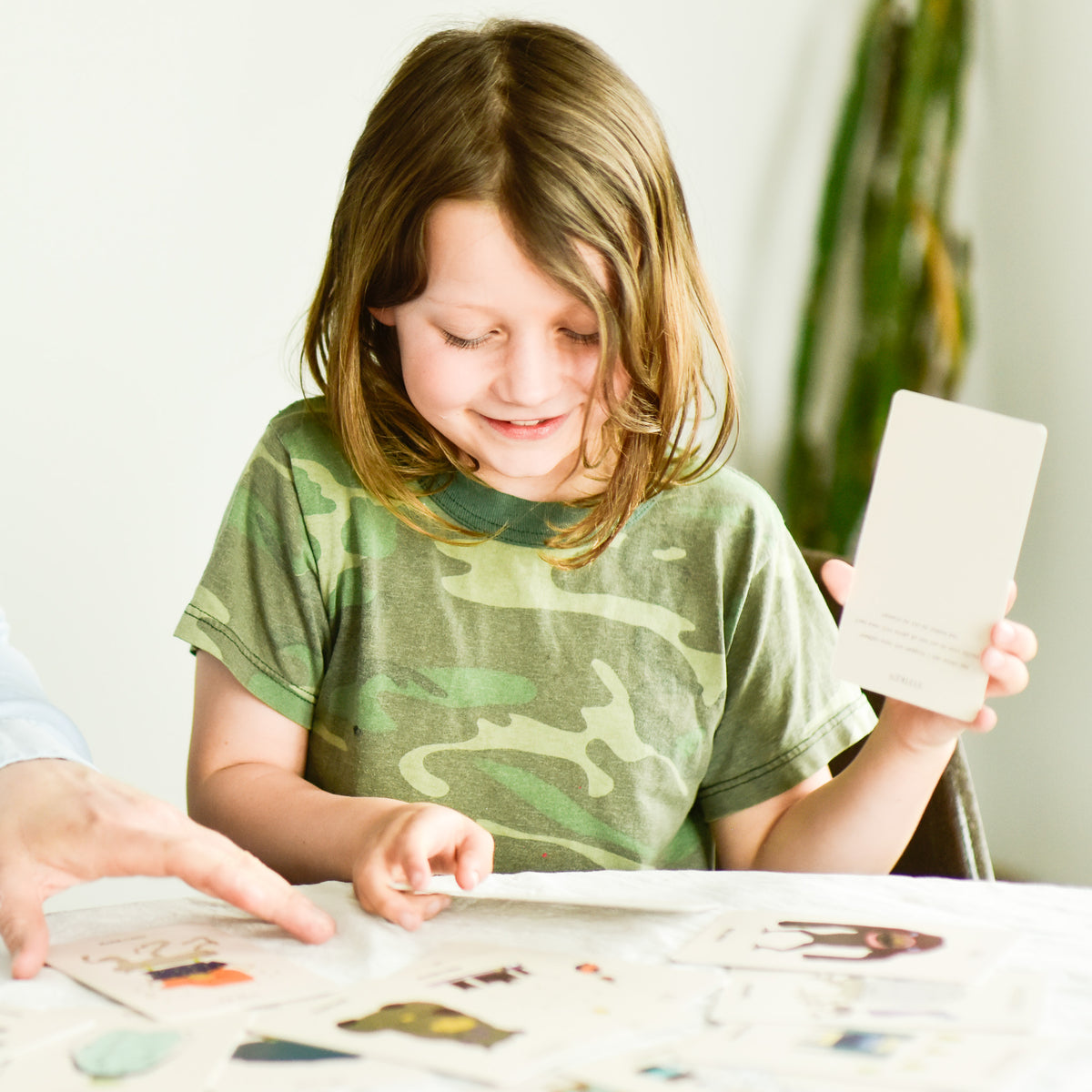
When feelings are put into words, something big happens
Children often feel more than they can express. Without words, they can easily feel misunderstood or alone. Studies show that children who develop an emotional language become more confident, more resilient, and less at risk of mental illness later in life.Me in me "makes feelings visible and talkable — so your child gets the tools to feel good today and build strength for the future."
UTVECKLADE AV LEG. PSYKOLOG
“If children don't learn to talk about their feelings now, the silence risks following them into adulthood.” - Licensed Psychologist
Children with high emotional intelligence:
What we hear from our customers after using the cards is:
- Better and closer relationship with your child
"I never thought he would think like this."
- Easier to talk about difficult topics
- Increased understanding of each other through conversation